Sep 17, 2026
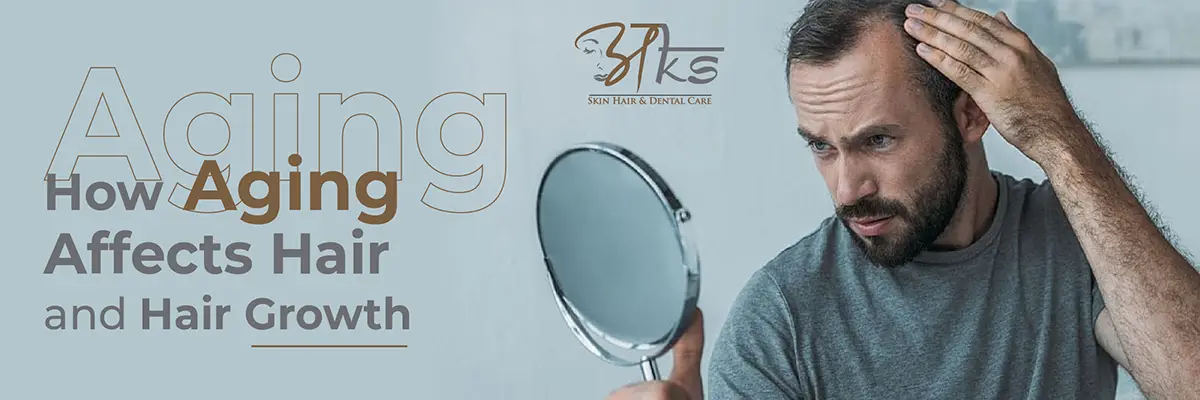
Hair changes with age just like skin does. For some people, the first change is a little extra shedding. For others, the hairline starts to look thinner, the crown loses volume, or the strands feel drier than before. Hair may grow more slowly, become coarse, dull, or change from its natural pattern. Not everyone experiences these changes at the same age. It’s a combination of genetics, hormones, lifestyle, scalp condition, nutrition, hair type.
Learning How Aging Affects Hair and Hair Growth can help you know what changes are normal and what changes might mean hair loss, scalp problems, or a medical cause.
Hair grows from tiny follicles under the scalp. Each follicle passes through a growth phase, a resting phase, and a shedding phase. When you are younger, many follicles stay active for a longer period. As you age, the growth phase may become shorter and some follicles may start producing finer strands.
That’s one reason hair may not feel as thick as it once did.” When you style you may experience less volume, or more scalp showing through your hair, or slower regrowth after shedding.
Age can also make existing conditions such as male pattern baldness, female pattern hair loss, or androgenetic alopecia more noticeable. If thinning keeps getting worse, it is better to look at the cause rather than blaming age alone.
Many people ask, does hair texture change with age? Yes, it can. Hair that was soft in your twenties may feel coarse later. Straight hair can become slightly wavy. Curly hair may lose some definition. Some people even notice different hair types in separate parts of the scalp.
So, can your hair texture change over time? It can, because the shape of the follicle, hormone levels, oil production, greying, and years of heat or chemical styling may all affect the strand.
That is why a shampoo, conditioner, or styling product that worked well for years may suddenly stop giving the same result.
Thinning is one of the most common hair changes linked with aging. The diameter of each strand can reduce, and fewer hairs may stay in the active growth stage at the same time.
Common signs include:
If you notice these signs early, an assessment for Hair Loss Treatments may help identify whether the problem is related to aging, genetics, hormones, stress, nutrition, or another condition.
Depending on the cause, doctors may discuss options such as PRP Treatment, GFC Therapy, Exosome Therapy, or Dutasteride Mesotherapy.
The scalp produces natural oil that keeps hair soft and protected. With age, oil production may reduce. This can make dry hair and rough hair more common, especially at the ends.
Dryness can be made worse by heat styling, hair color, bleaching, sun exposure and frequent shampooing. You may also notice frizz, split ends, tangles, dullness or breakage.
Some people refer to lifeless or badly damaged strands as dead hair. What you see is the hair shaft, which is already made of non-living keratin, but severely dry or damaged strands can still look weak and dull.
A good hair treatment for dry hair should focus on moisture, gentle washing, less heat, and avoiding repeated chemical damage.
If you often wonder, why does my hair take so long to dry, aging may be only one part of the answer.
Drying time depends on hair density, thickness, length, porosity, curl pattern, and product buildup. Some hair holds water for longer because of its structure. Other hair may feel wet on the outside because water does not enter the strand easily.
As hair texture changes with age, drying time can change too. If this happens along with sudden hair fall, scalp itching, breakage, or major texture changes, it is worth getting the scalp checked.
Grey hair does not only change colour. Many people feel that grey strands are drier, stiffer, or more wiry than pigmented hair.
This happens because the hair follicle changes with age and may produce less natural oil. Genetics also determine when the graying begins. Some people go gray early, others hold on to their natural color for much longer.
Gray hair is easier to manage if you use conditioner regularly, limit the use of hot tools and avoid very harsh shampoos.
Small changes in daily care can make a noticeable difference.
Dr Akhilendra Singh and Dr Khusboo Singh can assess hair density, scalp condition, hair loss pattern, family history, and follicle activity before suggesting a treatment plan.
Normal aging may reduce hair density, but sudden or fast hair loss needs attention. Bald patches, heavy shedding, a rapidly receding hairline, or a widening part may need medical evaluation.
Where appropriate, treatment may involve Hair Loss Treatments, PRP Treatment, GFC Therapy, Exosome Therapy or Dutasteride Mesotherapy for patients.
When hair loss is so advanced that the follicles are not producing usable hair, options like Biostimulated FUE or Hair Transplant Gurgaon or Hair Transplant Delhi can be considered after proper consultation.
Yes. Hair may spend less time in the active growth phase as you get older.
Yes. Individual strands may become finer and overall hair density may reduce.
Yes. Hair can become drier, rougher, finer, wavier, or less curly over time.
Yes. Lower scalp oil production can make hair feel drier and harder to manage.
No. Genetics, hormones, stress, nutrition, scalp conditions, and medical problems may also cause hair loss.


