June 22, 2026
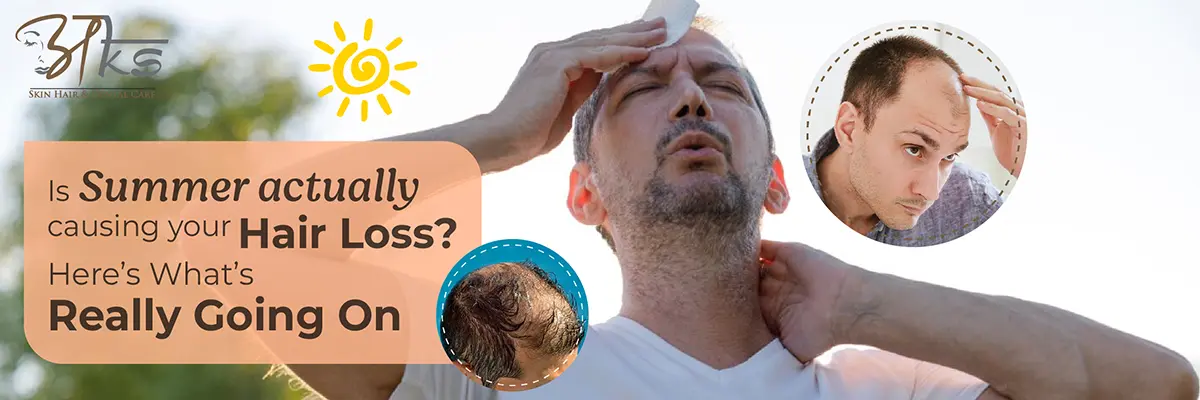
Every year, as temperatures climb across North India, I see the same pattern at our clinic in Gurgaon — patients walking in with clumps of hair on their pillow, in the shower drain, on their comb. And almost all of them ask the same thing: “Is it the heat? Am I going bald?”
The short answer is — probably not permanently. But summer does create a perfect storm of conditions that can seriously stress your hair and scalp. Let’s break down what’s actually happening, and what you can do about it.
India’s summers are brutal. We’re talking 40°C+ heat, humidity that makes your scalp feel like a greenhouse, and UV radiation that beats down for hours at a stretch. Your hair and scalp were not designed to handle all of this at once.
When you sweat heavily, that sweat doesn’t just evaporate — it mixes with the sebum (natural oil) your scalp produces, along with dust, pollutants, and bacteria. If you’re not washing your hair frequently enough, this mixture sits on your scalp and starts to block hair follicles. Blocked follicles get irritated. Irritated follicles become inflamed. And inflamed follicles don’t hold onto hair very well.
That’s how summer turns from a minor inconvenience into a genuine hair fall trigger.
A lot of people believe sweating itself damages hair roots. That’s not quite right. Sweat on its own is mostly water and salt — harmless. The real problem is what happens when sweat isn’t cleaned away.
Left sitting on the scalp, sweat creates a breeding ground for bacteria and fungus. This leads to conditions like folliculitis (infected hair follicles), seborrheic dermatitis, and worsening dandruff — all of which disrupt your hair’s natural growth rhythm. People who exercise outdoors regularly, construction workers, delivery riders — anyone spending long hours in the heat — tend to see this more than others.
The fix? Wash your scalp properly. Not just rinsing with water, but actually cleaning away the buildup with a gentle, sulphate-free shampoo, at least every two to three days during peak summer.
Here’s something most people don’t think about: your hair can get sunburned. Not in the obvious painful way your skin does, but UV radiation gradually strips away the outer layer of the hair shaft — the cuticle — leaving it rough, porous, and prone to snapping.
Signs that UV damage is affecting your hair:
For people who already have a thinning crown or a receding hairline, this matters even more — their scalp has less hair cover, meaning it absorbs more direct UV exposure than someone with thicker hair.
Here’s something that surprises a lot of patients: hair shedding in late summer and early autumn is biologically normal. Hair grows in cycles, and research suggests that more follicles shift into the shedding phase around this time of year than at other points.
Losing somewhere between 50 and 100 hairs a day is considered normal. You might notice this in the shower or on your brush and panic — but if it settles down within a few weeks, it was probably just seasonal shedding.
What’s not normal: shedding that goes on for more than two to three months, visible thinning at the temples or crown, a part that’s getting noticeably wider, or patches where the hair isn’t growing back. That’s when you need to come in and get checked.
Summer doesn’t operate in isolation. A few other factors tend to pile on during this time of year:
Dehydration — Most people don’t drink enough water in summer, and hair follicles, like every other cell in the body, need hydration to function properly. Chronic dehydration over weeks and months can slow hair growth and make existing hair more fragile.
Diet changes — Summer often means lighter eating, skipped meals, or lots of cold drinks and processed snacks. If your protein, iron, zinc, or vitamin D intake drops, your hair will reflect that within a few months (hair loss from nutritional deficiency typically shows up 2–3 months after the deficiency begins).
Stress — This one is especially relevant for younger patients. The link between chronic stress and hair loss (a condition called telogen effluvium) is well-documented. When the body is under sustained stress, it pushes a large number of hair follicles into the resting phase all at once — and then they shed simultaneously weeks later. For Gen Z patients in particular, the combination of academic pressure, work stress, poor sleep, and dietary habits creates real hair loss risk.
Hormonal imbalances — Thyroid problems, PCOS, and other hormonal conditions can accelerate hair fall at any time of year, but the additional stress of summer often pushes things over the edge.
You don’t need an expensive routine to protect your hair in summer. These basics genuinely make a difference:
If the tips above don’t bring your hair fall under control within 6–8 weeks, or if you’re already noticing visible thinning, don’t wait it out hoping it resolves on its own. The earlier a hair loss condition is caught, the better the chances of treatment working well.
At AKS Clinic Gurgaon, we assess the root cause first — whether it’s seasonal, genetic, nutritional, hormonal, or scalp-related — and build a treatment plan from there. There’s no one-size-fits-all approach to hair loss, and a proper diagnosis makes a huge difference in outcomes.
For most people, it’s temporary — especially if it’s driven by seasonal shedding, sweat buildup, or mild dehydration. But if there’s an underlying cause like genetic hair loss, a nutritional deficiency, or a hormonal issue, summer just acts as a trigger that makes it more visible. That’s why evaluation matters.
We’re seeing more patients in their 20s than ever before. Chronic stress, poor sleep, high-sugar diets, frequent use of chemical hair products, and sedentary lifestyles all contribute. It’s not just genetics anymore — lifestyle has a real and measurable effect on hair health.
About 90–95% of the hair strand is made of keratin, a fibrous protein. That’s why protein intake matters so much — your body literally builds hair from the protein you eat.
Yes, absolutely — with the right intervention. A combination of clinically proven treatments (like minoxidil or finasteride where appropriate), PRP therapy, dietary changes, and scalp care can stabilise hair loss at an early stage and, in some cases, partially reverse it. The key is not waiting too long.


