July 29, 2026
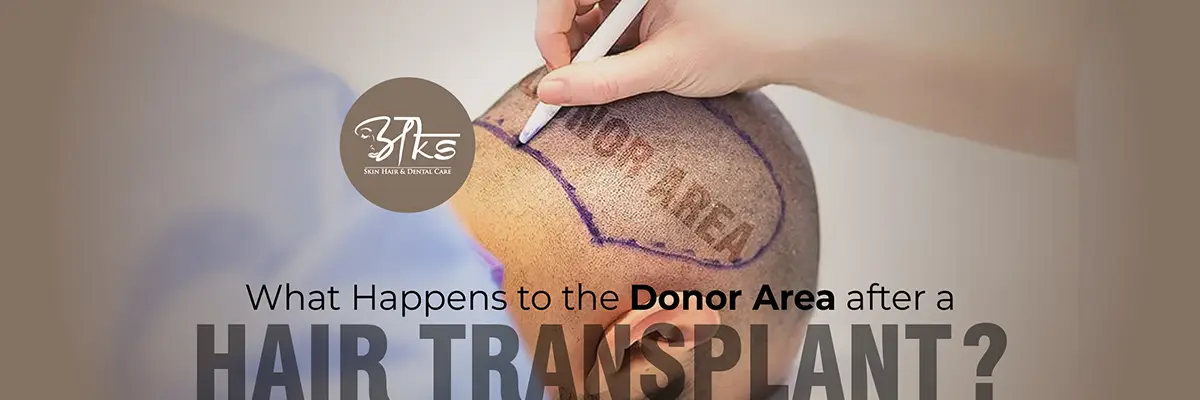
When you’re planning your hair transplant , most people think about their new hairline, but the donor area needs care, too. That’s the area of the scalp where the doctor removes healthy hair follicles. It’s usually located on the back and sides of the head.
After the procedure, the donor area may look red and sore and develop tiny scabs. For a few days, you may also experience some itching, tightness or numbness. In most cases, these changes are a normal part of healing.
The way the donor area looks after recovery depends on the number of grafts removed, the surgical method, the condition of the scalp, and the experience of the doctor.
The donor area contains hair follicles that are less likely to fall because of pattern baldness. Doctors usually collect hair from the back and sides of the scalp and place it in areas where hair has become thin or completely lost.
The transplanted grafts may be placed along the frontal hairline, temples, crown, or other bald areas.
Before starting the hair transplant procedure, the doctor should check:
This examination is important because donor hair is limited. Once a hair follicle is removed from its original place, it does not grow back there.
The donor area may appear red and dotted immediately after the procedure. Tiny crusts can form around the extraction points, especially after an FUE transplant .
The area may also feel tender once the effect of local anaesthesia wears off. Mild pain can generally be managed with the medicine prescribed by the doctor.
During the first few days, a patient may notice:
These signs should slowly be reduced. Pain or swelling that becomes worse instead of improving needs medical attention.
FUE stands for Follicular Unit Extraction. During this method, the doctor removes individual follicular units with a small punch tool.
Since each graft comes out through a separate opening, FUE leaves many tiny circular marks rather than one long cut. These marks normally become difficult to notice after healing, especially when the surrounding hair grows longer.
The donor area often starts settling within the first week. Most scabs begin to loosen during the following days. The NHS advises patients to handle transplanted hair carefully during the first two weeks and to follow their surgeon’s recovery instructions closely.
FUE does not mean that the scalp will have no scars at all. It can leave tiny dot-shaped scars. Their visibility depends on the punch size, skin type, hair length, number of grafts, and extraction pattern.
FUT stands for Follicular Unit Transplantation. In this method, the surgeon removes a thin strip of skin containing healthy follicles from the back of the scalp.
The area is then closed with stitches or staples. This method normally leaves a thin horizontal scar.
Longer hair often covers the scar, but it may become visible with a very short haircut. Healing may also feel tighter than FUE because the surgeon closes a longer wound.
The final scar may depend on:
Patients should not stretch, rub, or put unnecessary pressure on the area during early recovery.
Healing time is different for every patient, but the early recovery often follows a similar pattern.
First Three Days
The area may look red and feel tender. Small scabs start forming over the extraction points. Patients should not scratch or rub the scalp.
Days Four to Seven
Soreness usually starts reducing. The scalp may feel itchy as the small wounds heal. Washing should only be done according to the doctor’s advice.
Days Eight to Fourteen
Most scabs begin to disappear. Redness may also reduce, although it can remain longer in people with sensitive or lighter skin.
Three to Four Weeks
The donor area generally looks much cleaner. Hair around the extraction points starts growing and makes the area appear more even.
Temporary numbness or unusual scalp sensation may stay for a few more weeks in some patients.
The hair follicles taken out during surgery do not grow back in their original place. The complete follicle is moved from the donor area to the recipient area.
However, the donor area does not normally look bald after a well-planned transplant. Hair that remains around the extraction points continues to grow and covers the small spaces.
For example, when a doctor takes grafts evenly from a wide section, the change in density may remain difficult to notice. If too many grafts are removed from one small section, that part may look visibly thin.
Yes, it can happen when the surgeon removes more grafts than the scalp can safely provide.
This problem is called overharvesting.
An overharvested donor area may show:
The International Society of Hair Restoration Surgery warns that overharvesting and collecting grafts outside the safe donor area are among the main risks linked with poorly performed FUE surgery.
Careful planning and even distribution of extraction points can lower this risk.
Some patients notice extra hair fall around the donor area a few weeks after surgery. This can happen because nearby follicles react to the stress of the procedure. Doctors often call this shock loss.
In many cases, the affected follicles are not permanently damaged, and hair growth gradually returns. Recovery may take a few months.
A doctor should examine sudden or severe patchiness because not every case of hair loss after surgery has the same cause.
Good hair transplant aftercare helps the small wounds close properly and lowers the chance of infection.
Patients should generally:
The washing technique matters. Strong rubbing, direct water pressure, fingernails, and rough towels can irritate the healing scalp.
The same donor-area rules apply to hair implants for women, but doctors must examine the pattern of hair loss more carefully.
Some women have thinning across a large part of the scalp, including the possible donor area. In such cases, the hair at the back may not be stable enough for transplantation.
A proper scalp examination helps the doctor decide whether a woman is suitable for surgery. It also helps set realistic expectations about density and coverage.
A hairline transplant should not focus only on placing a large number of grafts at the front. The doctor must also protect the donor supply.
A low or very dense hairline may use too many grafts. This can leave fewer follicles for the crown or for future sessions if hair loss continues.
At AKS Clinic, the doctor can study the donor density, hair calibre, scalp condition, bald area, and possible future hair loss before planning the number of grafts.
Mild redness, soreness, and itching may occur during normal healing. Contact the clinic when you notice:
Do not try to treat these signs with home remedies. Let the surgeon check the scalp.
The donor area after a hair transplant normally goes through redness, tenderness, scabbing, and mild itching before the skin settles. These changes often improve during the first one to two weeks, while complete recovery may take longer.
The removed hair follicles do not grow back in their original places. Still, the remaining hair can cover the extraction points when the doctor removes grafts evenly and stays within a safe limit.
A good transplant should improve the hairline without leaving the back of the scalp looking thin or patchy. Before surgery, ask the doctor about donor density, safe graft count, expected scars, recovery time, and future hair loss. Proper planning protects the donor area and keeps options open if another session is needed later.
It may last for a few days or up to two weeks. Sensitive skin can remain red for longer.
No. The removed follicles are transferred to another area and do not return to their old position.
Mild itching is common while the skin heals. Avoid scratching or picking the scabs.
It can happen when too many grafts are removed or extraction is not spread evenly.
Follow the washing schedule given by your surgeon, as instructions may differ according to the procedure.


