Aug 18, 2026
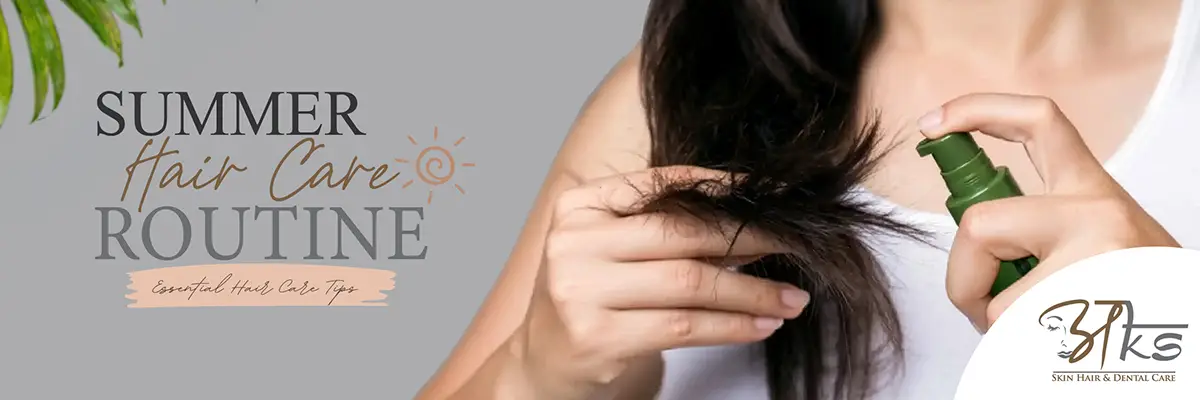
Hot weather can leave your scalp sweaty, your roots greasy and your hair dry at the ends. Strong sunlight, dust, humidity, swimming and frequent washing can also increase tangles and hair breakage. A practical Summer Hair Care Routine: Essential Hair Care Tips can protect your scalp, support healthy hair growth and help you retain your natural length.
You do not need to follow a complicated routine. A mild shampoo, a suitable conditioner, sun protection and careful styling can prevent much of the seasonal damage. The right routine should match your scalp condition, hair texture and daily activity level.
A clean scalp provides a better environment for healthy-looking hair. During summer, sweat mixes with oil, dirt and styling products. This buildup may make the scalp feel itchy or uncomfortable.
Wash your hair when you can see that the surface of your hair is oily or sweaty. Shampoo mostly on the scalp, and massage it in gently with your fingertips. When you rinse your hair, let the lather run down the length of your hair rather than rubbing the strands together.
A thorough assessment of ongoing flaking, irritation or over-oiliness may result in a recommendation for professional scalp treatment.
People with oily scalps may need more frequent washing, while those with curly, coloured or chemically treated hair may need longer gaps between washes. Choose a gentle shampoo that cleans without leaving the scalp tight or overly dry.
Don’t wash with very hot water. Lukewarm or cool water is more pleasant and may help keep your hair manageable.
Conditioner reduces friction between the strands and makes detangling easier. Apply it from the mid-lengths to the ends, especially if your roots become oily quickly.
Leave-in conditioner can also help if you have long, curly or damaged hair. It may reduce frizz and protect dry ends from repeated rubbing.
Many people ask, “why is my hair breaking off even though I wash it regularly?” Washing alone cannot prevent damage. Rough drying, heat tools, bleaching, tight hairstyles and aggressive brushing are common hair breakage causes.
As you comb through it, you’ll notice short uneven strands, split ends, rough texture and hair snapping off. Hair shedding is normally from the root, but broken hair will come off in different lengths.
Follow these practical steps:
These habits answer the common question of how to prevent hair breakage without relying on costly products.
A broken strand cannot join itself again, but you can protect the remaining length. Reduce chemical treatments, use conditioner after every wash and apply a light serum to rough ends.
People searching for how to fix hair breakage should also check whether frequent colouring, straightening or extensions are weakening their hair. If you keep breaking off even though you’re taking better care of your hair, seek the advice of a professional for a hair and scalp consultation.
Strong sunlight can make hair feel dry, especially when it is coloured or chemically treated. Cover your hair with a scarf, cap or wide-brimmed hat when spending long hours outdoors.
Before entering a pool, wet your hair with clean water. You can also apply a small amount of conditioner to the lengths. Rinse your hair soon after swimming so that chlorine or salt does not remain on the strands.
Summer humidity can make hair harder to style, but repeated straightening often causes more dryness and breakage. Let your hair air-dry partially before using a dryer. Keep heat tools on a low or medium setting and apply a heat-protective product first.
Loose braids, buns and ponytails are better everyday options than tightly pulled styles.
Healthy hair growth depends on your scalp condition, nutrition, general health and genetics. Oils and masks may improve softness, but they cannot correct every cause of thinning.
Useful long hair growth tips include:
People experiencing thinning may explore hair growth treatment after identifying the cause.
Home care may not be enough when hair loss continues for several months. At AKS Clinic, Dr. Akhilendra Singh and Dr. Khusboo Singh discusses the best options after analysing the scalp and pattern of hair loss.
PRP hair treatment uses platelet-rich plasma prepared from the patient’s own blood. Doctors may recommend it for selected cases of early thinning or weakened hair follicles.
GFC hair treatment uses concentrated growth factors derived from the patient’s blood. It may be considered for people experiencing early-stage hair thinning, depending on the diagnosis.
Exosome hair therapy is another treatment discussed for certain hair and scalp concerns. Its suitability should be decided after a consultation rather than based on online claims.
People with permanent bald areas, a receding hairline or pattern hair loss may consider a hair transplant. Techniques such as FUE hair transplant and DHT hair transplant move suitable follicles from the donor area to thinning or bald areas.
The recommended technique and hair transplant cost depend on the number of grafts, donor-hair quality, baldness pattern and treatment plan.
Consult a qualified hair specialist if you notice:
AKS Clinic can evaluate whether you need scalp care, hair loss treatment, non-surgical therapy or surgical hair restoration. Early assessment may help prevent avoidable delays in treatment.
A good Summer Hair Care Routine: Essential Hair Care Tips should keep the scalp clean, preserve moisture and reduce daily damage. Wash gently, condition regularly, limit heat and protect your hair from sunlight and swimming water. Seek medical advice when thinning, shedding or scalp problems continue despite proper care.
Wash according to scalp oil, sweat and activity level. Use a mild shampoo when frequent washing is necessary.
Dryness, heat styling, rough brushing, chlorine and tight hairstyles may cause summer hair breakage.
Eat balanced meals, protect the hair from breakage, sleep well and manage scalp problems early.
PRP may help selected patients, but results depend on the cause and stage of hair loss.
Consider it after a specialist confirms permanent hair loss and checks your donor-hair quality.


