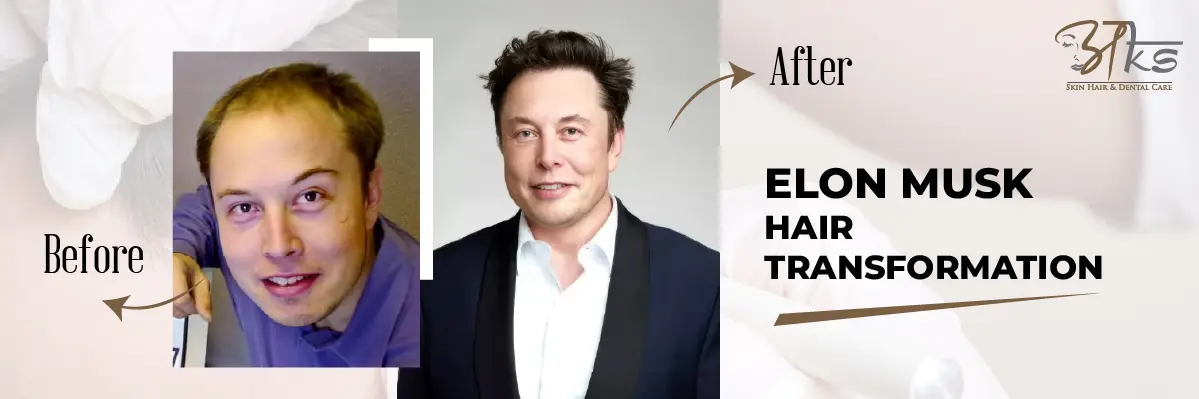
The topic of elon musk hair transplant is often discussed in medical hair restoration circles because his transformation reflects a textbook example of advanced surgical correction for male pattern baldness. Early public images clearly show progressive elon musk hair loss, while later appearances demonstrate stable density and a reconstructed elon musk hairline.
From a clinical perspective, this shift is not just cosmetic — it reflects how modern transplant science can alter the long-term trajectory of elon musk balding patterns.
When doctors study elon musk hair before and after, they usually evaluate three core indicators:
Photos from Musk’s early career show a pattern consistent with androgenetic alopecia. Dermatologists often classify this stage as early balding elon, where follicular miniaturization begins due to DHT sensitivity.
Today’s elon musk hair suggests not only restoration but also stabilization — which is medically significant.
Hair transplant surgeons often use the Norwood scale to assess musk bald progression.
Clinical estimation suggests Musk moved from:
This degree of reversal rarely occurs naturally. It typically requires transplantation combined with medical therapy.
This explains why discussions around bald elon musk frequently appear in transplant education seminars as real-world visual examples.
Male pattern baldness affects nearly 50% of men by age 50, according to dermatology research.
The biological process involves:
In cases like elon balding, frontal follicles become dormant but remain viable for surgical relocation.
This biological understanding supports the theory of elon hair transplant intervention rather than spontaneous elon musk hair growth.
Modern surgeons often analyze elon musk hair plugs discussions through technique evolution.
FUT (Strip Method)
Higher graft yield, used widely in early 2000s
FUE (Follicular Extraction)
More natural hairline refinement, minimal scarring
Experts believe Musk’s early correction could align with FUT, followed by FUE refinement. This approach explains the natural density seen in current musk hair.
Hairline restoration cases like elon musk saç ekimi typically require:
Surgeons emphasize that the improvement in elon musk hair line appears consistent with elite-level transplant planning rather than basic cosmetic treatment.
Hair transplant success rates today exceed 90% graft survival when performed under advanced protocols. Studies in dermatologic surgery journals highlight that early intervention improves long-term results.
Hair specialists frequently cite celebrity cases such as elon musk calvo discussions to educate patients about realistic expectations.
From a clinical teaching standpoint, what did elon musk do to his hair represents:
Hair restoration is not purely medical. In leadership psychology, facial framing influences perceived vitality and authority.
The shift from elon musk bald speculation to a stronger visual presence demonstrates how personal image can affect:
This dimension explains why bald elon transformation stories often trend beyond medical communities.
Experts widely believe Elon Musk likely underwent a hair transplant combined with medical therapy, though he has never confirmed this publicly.
There is no verified information, but dermatologists suggest maintenance treatments like DHT-blocking therapy may support transplant results.
Visible thinning appeared during Musk’s late 20s, progressing into his early 30s before restoration.
There is no official record, but clinical observers estimate one major transplant session with possible refinement procedures later.


