July 25, 2026
Hair thinning usually precedes the appearance of a bald spot. In many cases, it starts with extra hair fall, a wider parting, a visible crown, or weaker strands around the hairline. At this stage, the hair roots may still be active, but they may not produce strong hair.
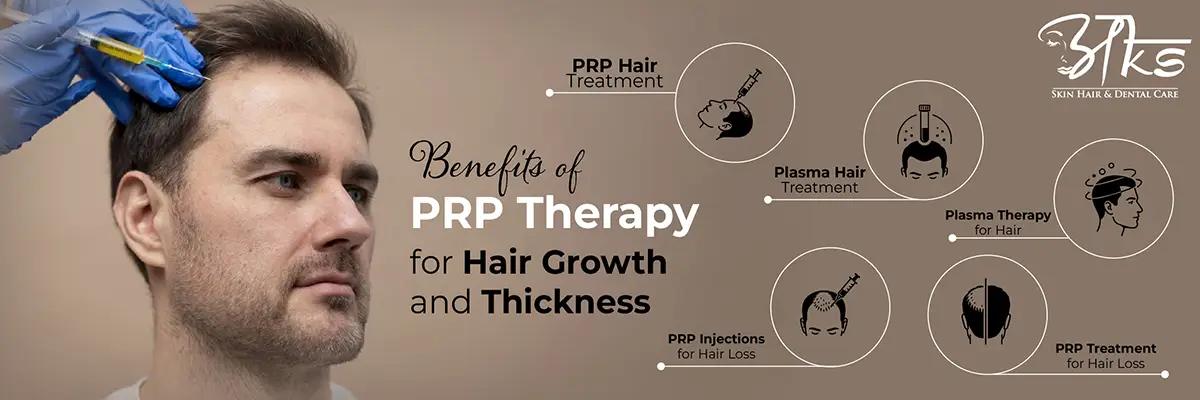
PRP hair treatment may help such weak follicles. It uses platelet-rich plasma prepared from the patient’s own blood and places it into the thinning areas of the scalp. The main benefits of PRP therapy for hair growth and thickness include reduced hair fall, better hair density, stronger strands, and improved support for active follicles.
PRP treatment for hair loss works best when the doctor first identifies the cause of thinning and checks whether the hair roots are still active.
PRP is platelet-rich plasma. The doctor takes a small amount of the patient’s blood. The blood is spun in a centrifuge and the platelet-rich plasma is separated from the rest of the blood.
The doctor injects this prepared plasma into the areas where hair looks thin. Platelets contain growth factors that support tissue repair and cell activity. These growth factors may help weak hair follicles work better.
You might hear this process called:
They all describe the same general process.
Excessive shedding is often the first warning sign of hair loss. You may notice more hair on your pillow, comb, bathroom floor, or shower drain.
PRP injections for hair loss may strengthen weak follicles and help reduce abnormal shedding. The change happens gradually, so patients should not expect overnight results.
For example, a person losing 100 to 150 strands daily may first notice less hair fall before seeing visible improvement in density.
Hair can look thin even when the follicles are still present. This happens when the follicles start producing weaker and finer strands.
Plasma therapy for hair may support these weak follicles and help them produce healthier-looking hair. As the strands become stronger, the scalp may appear less visible.
PRP works better in areas with thin hair than in areas that have remained completely bald for several years.
Hair density means the number of strands present in a specific area of the scalp. When density falls, the hair parting becomes wider and the crown looks more visible.
PRP treatment for hair loss may help improve density in people with early-stage thinning. The treatment may be useful for both men and women, depending on the cause of hair loss.
The doctor may take photographs of the scalp before the first session, and after a few months to compare to see any changes.
One of the main benefits of plasma hair treatment is that it uses plasma prepared from the patient’s blood. No artificial filler or foreign material goes into the scalp.
This may lower the chance of allergic reaction. However, patients can still experience mild redness, tenderness, swelling, or sensitivity after the session.
A qualified doctor should review the patient’s medical history, medicines, scalp condition, and blood-related problems before starting treatment.
PRP hair treatment is a non-surgical procedure. The doctor gives small injections across the thinning areas of the scalp.
Most patients return to their routine soon after the session. The doctor may advise them to avoid heavy exercise, hair colour, harsh shampoo, oil massage, or direct heat for a short period.
This makes PRP suitable for people who want a treatment with limited downtime.
| Treatment Point | What Patients Should Know |
|---|---|
| Procedure type | Non-surgical |
| Main purpose | Reduce shedding and support weak follicles |
| Suitable for | Early hair thinning and active hair roots |
| First visible change | Often reduced hair fall |
| Full improvement | May take several months |
| Maintenance | May be required |
| Best results | Depend on diagnosis and treatment consistency |
PRP may suit people who have:
At AKS Clinic, the doctor checks the scalp, hairline, crown, donor area, hair density, medical history, and family history before suggesting PRP.
This scalp assessment helps identify whether the patient needs PRP, medicines, nutritional support, scalp treatment, or a hair transplant.
PRP may not provide strong improvement in every case. It may have limited value when:
A proper diagnosis helps avoid unnecessary treatment.
A typical session includes the following steps:
The doctor examines the scalp.
The procedure time and number of injections depend on the size of the treatment area.
The number of sessions varies from person to person. Many patients need an initial set of sessions followed by maintenance treatment.
The doctor decides the schedule based on:
Patients should avoid choosing a fixed package without a scalp examination.
Hair grows slowly, so PRP results take time. Some patients first notice reduced shedding. Later, they may see better texture, strength, or density.
Visible change may take a few months. The result depends on the number of active follicles and the cause of hair loss.
A patient with early crown thinning may respond better than someone with a smooth bald patch.
To make this page more useful, add:
Use descriptive image alt text such as “PRP hair treatment procedure” or “plasma therapy for hair thinning.”
The benefits of PRP therapy for hair growth and thickness make it a useful option for people with early thinning and weak but active follicles. It may reduce hair fall, support better density, and improve the strength of existing strands.
However, PRP does not work the same way for every patient. A scalp examination at AKS Clinic can help identify the cause of hair loss and decide whether PRP treatment for hair loss is suitable.
It may reduce shedding when weak but active follicles cause the hair fall.
PRP usually gives limited results on long-standing smooth bald areas.
Patients may feel mild pricking or pressure during the injections.
Results vary, and some patients may need maintenance sessions.
Yes, suitable women with active follicles and pattern thinning may consider PRP.


